SEXISM AND MISOGYNY IN FOOTBALL

FOOTBALL VS THE WEB

LISTEN TO
THE EPISODE

Listen to the accompanying audio episode, featuring Alice Abrahams. She discusses her experiences facing sexist abuse online as well as the harsh reality of being a woman in football content creation

Women,
Football &
Equality

INTRODUCTION.

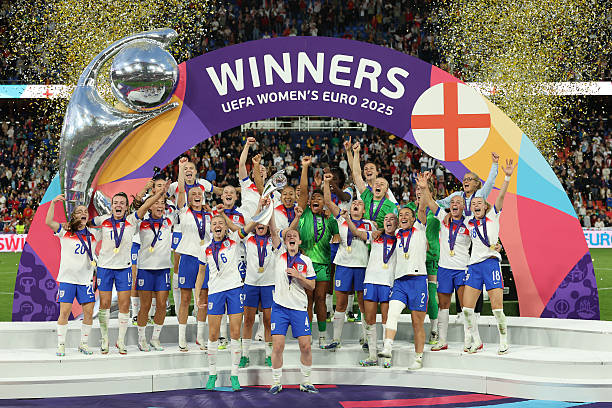
Women's football has grown dramatically in recent years, predominantly due to the success of the England Lionesses in recent years, winning back-to-back Euro competitions and reaching the FIFA World Cup Final in 2023. This has resulted in attracting larger audiences, greater media attention and a new generation of supporters, both women and men.

However, the growth of the women's game has not erased the barriers that women continue to face. From unequal coverage and investment to sexism, harassment and online abuse, women in football continue to fight for recognition and respect.

The history of women in football is also one of resistance and fight. Women have been playing the game for generations, despite periods where authorities and governing bodies attempted to restrict them or even prevent them from playing.

Women's football

THE GAME
IS CHANGING

THE GROWTH OF WOMEN'S FOOTBALL.

As mentioned during our introduction, the womens game has grown hugely following the success of the Lionesses at both EURO tournaments. According to an article published by England Football, there was a 196% search increase in participation the day after England were crowned EURO 2025 Champions. Participation levels had also increased 5% compared to the numbers before the tournament had started. This was also paired with a 12% increase in female football coaches and 29% increase in female referees.

Tom Corbett, Managing Director of Sponsorship and Client Experience at Barclays shared in March 2026 that Women's football spending is 'accelerating' with an 11.7% rise around Barclays Women's Super League matches since 2021/22 and that fans wanted bigger stadiums, with 60% of fans saying they would more likely attend matches if they were hosted at the clubs main stadium.

Match attending fans have boomed in recent years compared to 2010, which was the year of the Women's Super League formation. According to an article written by Paul Quinn on the Analysis Series, states that in 2011 attendances were just 550 on average. However in the 2022/23 season, attendances were as high as 5,200 showcasing an extreme increase in the space of 11 seasons of football. This increase also carried over into the 2023/24 season - the season following the Lionesses EURO's triumph - with over 7,300 people attending fixtures on average. The total attendance across the WSL and Women's Championship was over 1,000,000, a new record at the time, with 970,000 coming from the top flight alone.

THE NUMBERS
TELL A STORY

Women's football continues to grow, but the experiences of women within football reveal another side of the story. In a study by HERGameToo, the organisation surveyed 371 women about sexism and abuse connected to football. This was a variety of scenarios such as in person but predominantly in an online setting.

0
WOMEN SURVEYED
HERGAMETOO SURVEY
0
SAW SEXIST ONLINE ABUSE
91.9% OF RESPONDENTS
ONLINE ABUSE
91.9% SAW SEXIST ABUSE TOWARDS A WOMAN
PERSONAL EXPERIENCE
WOMEN WHO EXPERIENCED SEXIST ONLINE ABUSE
SEXISM DOESN'T STOP ONLINE
EXPERIENCES REPORTED BY THE 371 WOMEN SURVEYED
SOURCE: HERGAMETOO — SURVEY OF 371 WOMEN
HERGAMETOO — 371 WOMEN SURVEYED

HOW MANY WOMEN
DOES THIS AFFECT?

Each dot represents one woman who took part in the HERGameToo survey. 341 white dots represent the 91.9% who had seen sexist online abuse towards a woman in football. The remaining 30 grey dots represent the other 8.1% of respondents.

91.9% — SAW SEXIST ONLINE ABUSE
8.1% — REMAINING RESPONDENTS
HOVER OVER THE FIGURES TO SEE 371 WOMEN FORM A FOOTBALL

WHAT DO THE NUMBERS TELL US?

Based off of the figures shown in the charts and graphics, of the 371 women who took part in the survey, 91.9% of women saw sexist abuse online and just 8.1% saying they didn't see online abuse. The survey which was conducted by HERGameToo highlighted that 63.1% of women had first-hand experience of facing misogynystic or sexist abuse online and that only 36.9% didn't.

Women being exposed to misogynystic views and sexist abuse didn't just stop at online abuse however, but in person too. According to the report, over half (58.4%) of women have faced abuse in person. Out of the 371 women involved in the survery, just 30 were not exposed or had to deal with abuse online.

Featured women's football fan

A FAN'S
EXPERIENCE

ALICE ABRAHAMS (ALICE TALKS FOOTY)

"If you're a woman and you get something wrong, you will be held to a higher standard."

ABOUT ALICE.

Alice is a football content creator, producing entertaining videos about Manchester United across a variety of platforms. Accumalating near half a million followers across her platforms, Alice is one of the biggest Man United creators in the world.

Growing up, Alice was football obsessed. Whether she was playing it or making videos about it, there wasn't a time where she wasn't a fan. ''I started football content creation at the end of 2019 when I finished my A-Levels. I had a little experience with YouTube when I was 13 but had no real success with that,'' said Alice.

However, quickly after starting content creation on a regular basis, it became apparent the differences a woman in football media will have to face compared to a male. This reality stemmed from reading fan comments addressing male pundits mistakes compared to a womans'.

''There are some male pundits on TV who I won't name but I don't think are particularly good, I'll hear them say something wrong but no one will say anything. As soon as a female pundit gets something wrong, people clip it up and put it online,'' said Alice.

Alice has faced her fair share of abuse online, but not in the way you might think at first. During her career in football media, Alice has been on the receiving end of unsolicited photos in her inbox from men which according to The Guardian, more than a quarter of UK girls have experienced in their lifetime.

She said: ''I was expecting the sexism, but I wasn't expecting the weird messages. People would send really innapropriate videos & images. I had a public email which people used to bombard with crazy messages multiple times a day.''

''I think a lot of it comes from insecure men and everything Joey Barton was saying online about womens' football. As soon as one of them missed a penalty he will say 'look how bad these penalties are.' I just think there's a small percentage of people who love to hate,'' added Alice.

In December 2025, Joey Barton received a suspended prison sentence for sending offensive X posts targeting female pundits Lucy Ward and Eni Aluko. The ex-footballer posted to his 2.7 million followers calling the two pundits 'the Fred and Rose of football commentary.' Judge Menary said: ''Barton launched a racially charged and sexist attack on Aluko that asserted that a black female broadcaster held her position soley due to her race.''

Alice has since pinpointed that she receives the most amount of hate when she's been given opportunities to work with broadcast companies such as Sky Sports.

''People just say 'oh diverstiy hire'. Stuff like that, because I'm a woman. I feel that when I do something right and get on Sky which a lot of people want to do, I think it's some form of jealousy where another Man United fan thinks he knows more than me, which he might, but he sees me on TV and not him. It could come from a jealousy or insecurity of men thinking they know better than women.''

Whilst it's clear womens sport is being taken more seriously from a broadcasting and business point of view - particularly because of its' increase in participation at grassroots - football fandom online is still a long way from accepting the womens game and its' creators for what they are. Professionals who have dedicated years of their lives to reach the pinnacle of football and football media. However, with half of media rooms consisting of women, more and more female journalists and creators are seeing mens football as a possible career route, something that up until only 20 years ago wasn't seen as a concrete option.

THE CONVERSATION
CANNOT STOP HERE

BEYOND THE NUMBERS.

The growth of women's football represents a major cultural change, but visibility alone cannot solve the problems that women experience within the sport.

Clubs, governing bodies, broadcasters, sponsors, journalists and supporters all have a role to play in creating a football environment where women can participate without facing discrimination, harassment or unequal treatment.

THE FUTURE
OF FOOTBALL
IS
FOR EVERYONE